Preserving the fall harvest in Ellis County: canning, freezing, and drying basics
October 19, 2026 · Shannon Miles
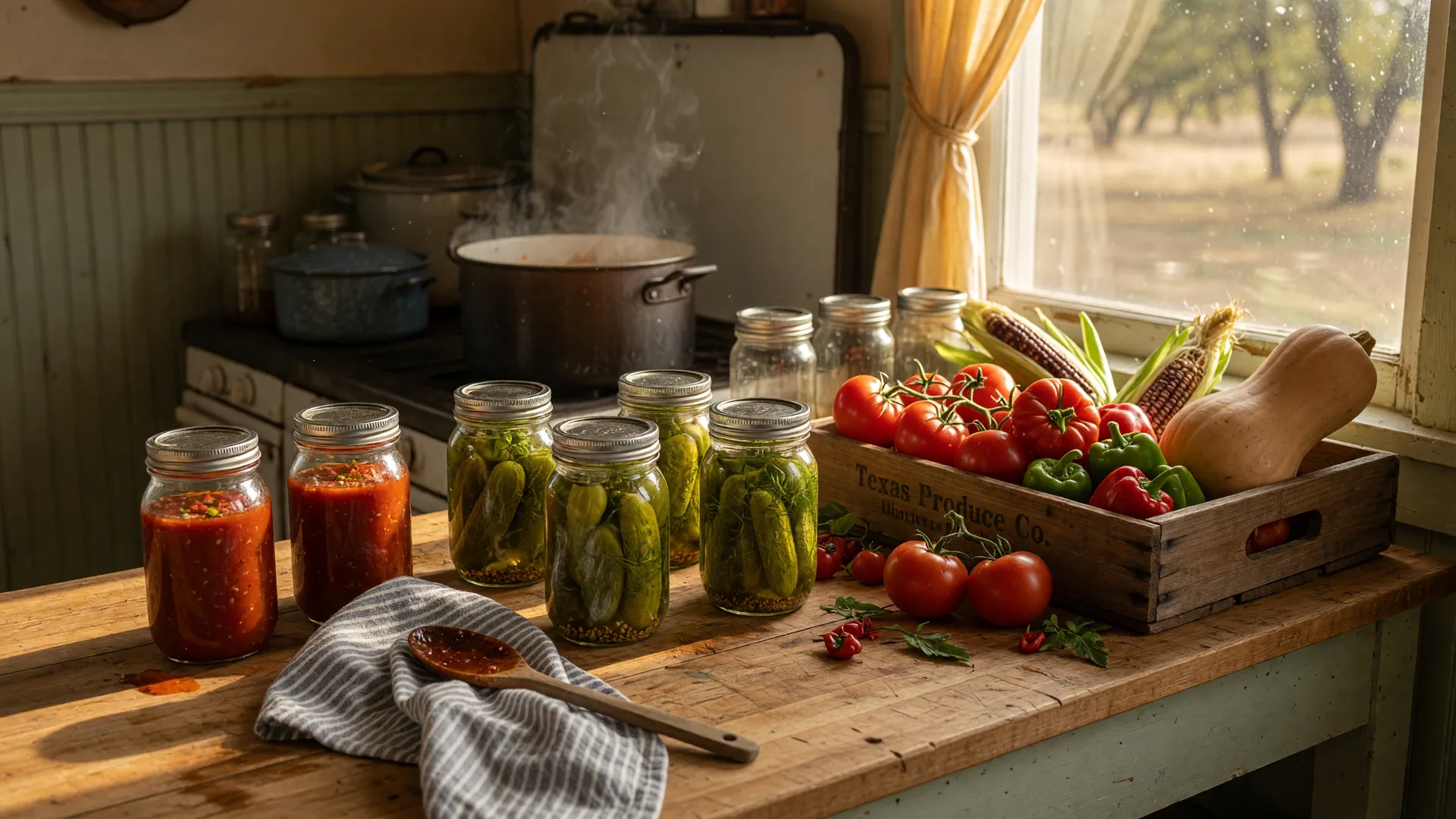
This guide is about preserving the fall harvest safely on Ellis County acreage, from the first tomatoes and peppers to the squash, beans and greens of late October. The short answer is that most garden produce can be kept for winter in one of three ways: canning, freezing or drying, and the method you choose has to match the food. Texas A&M AgriLife Extension's guidance is the standard to follow, because the difference between a pantry shelf and a food safety problem comes down to acidity and heat.
Why late October is the time to preserve
Around Ennis, the average first frost lands between roughly November 11 and 20, with the first hard freeze following in mid to late November in the USDA Zone 8b area. That means the warm-season garden is wrapping up now, and the tomatoes, peppers, squash and cucumbers coming off the vines are exactly the crop worth putting up. Freeze-damaged fruit does not keep well in a jar, so gather the good harvest before the cold settles in.
Water bath canning versus pressure canning: which do you need?
The single most important rule, echoed by Texas A&M AgriLife Extension, is that the canning method must match the acidity of the food. Water bath canning processes jars at about 212 degrees Fahrenheit, the temperature of boiling water, and it is safe only for high-acid foods. That includes fruits, jams, jellies, pickles, relishes, salsas and properly acidified tomatoes, which must have lemon juice, citric acid or vinegar added.
Low-acid foods are the ones that demand a pressure canner. All vegetables, meat, poultry and soups fall into this group, and they must be processed at about 240 degrees Fahrenheit at the correct pounds of pressure. The reason is not negotiable: Clostridium botulinum spores survive boiling water and can produce deadly toxin in a sealed low-acid jar. A pressure canner is the only safe way to put up green beans, corn, carrots or broth.
Use only tested recipes
AgriLife is clear that you should follow tested recipes exactly, never altering processing times, pressures or jar sizes. The USDA Complete Guide to Home Canning, available through the National Center for Home Food Preservation, is the standard reference, and the AgriLife "Preserving the Harvest" program series teaches the safe methods in hands-on classes. The Ellis County office in Waxahachie is a good first call for the current class schedule and tested recipes.
Freezing is often the simplest method
Freezing the fall garden is straightforward and forgiving, and AgriLife's guidance is to blanch most vegetables before freezing to stop the enzymes that cause off flavors and mushiness. Typical boiling water blanching times from the National Center for Home Food Preservation include green beans at about 3 minutes, broccoli and cauliflower at 3 minutes, okra at 3 to 4 minutes, peas at about 2 minutes and summer squash at 3 minutes. Cool the vegetables quickly in ice water, drain them well and pack them in freezer bags. Because Ellis County sits near sea level, no altitude adjustment is needed here.
Drying and cold storage for the rest
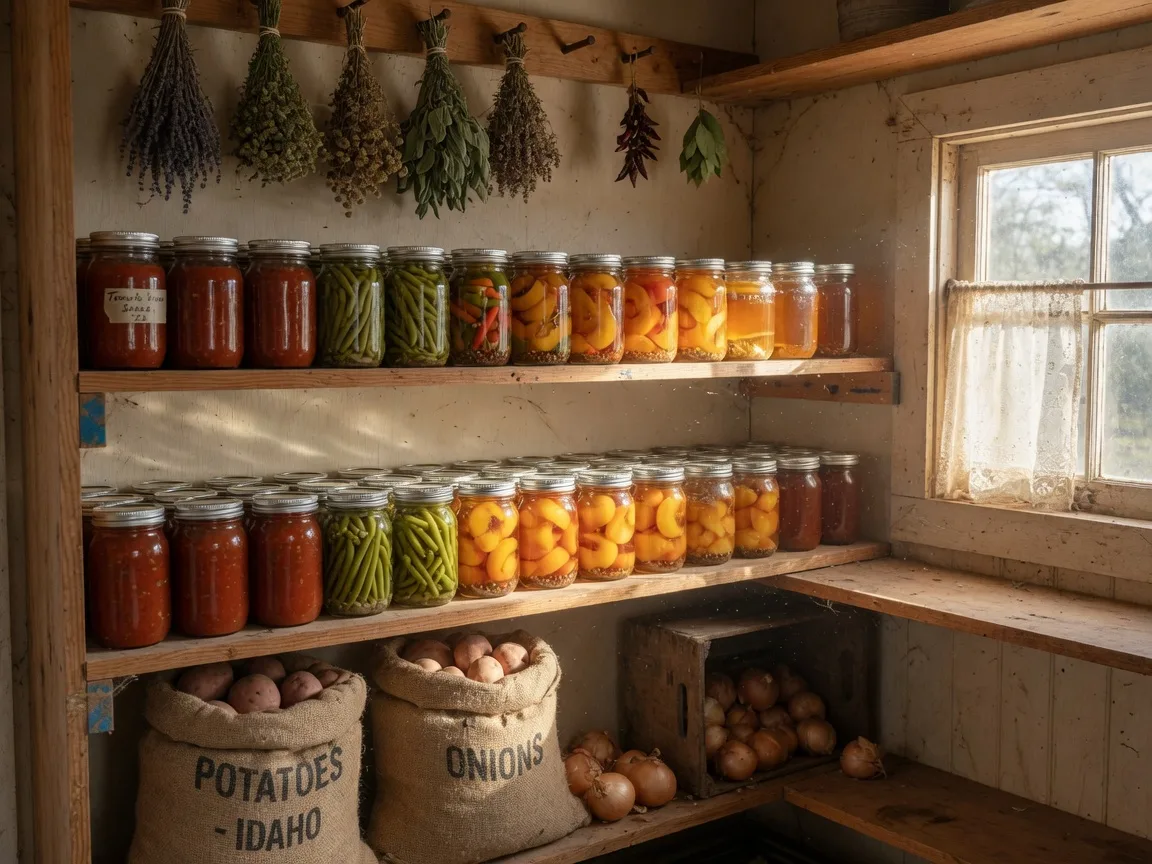
Drying is another low-fuss option for herbs, peppers and tomatoes. A dehydrator or a low, slow oven works, and properly dried foods keep for months in airtight containers. Some crops need no processing at all: winter squash, onions, garlic and potatoes store well in a cool, dark, dry place, which is why a pantry, cellar or spare room with steady temperature is a real asset on a homestead.
Where to find help and tested guidance
Start with Texas A&M AgriLife Extension, which publishes the canning and food preservation guides, and the National Center for Home Food Preservation for tested recipes and blanching charts. The Ellis County AgriLife office in Waxahachie connects residents to the "Preserving the Harvest" series and Master Gardener programs. When a recipe says water bath and another says pressure can, trust the tested source, not the shortcut you saw online.
A kitchen built for putting up the harvest
Preserving is easier when the kitchen has room to work, and the fully renovated home at 917 Goodwyn Rd was set up with that in mind: an open kitchen with generous counter space, an island cooktop, a double wall oven and stainless appliances, plus a substantial laundry and mudroom for the messier jobs. With more than 18 acres, there is room for a garden that produces enough to fill the pantry, and a barn and poultry setup for the next chapters of the homestead.
Shannon and Scott Miles of the Shannon Miles Group are Land and Ranch Specialists and founding members of the eXp Land and Ranch division, based at 2322 Lamar Ave. in Paris, Texas. Both hold the Graduate, REALTOR Institute designation and are Certified Luxury Home Marketing Specialists. They help buyers read the land, water, fencing and improvements a homestead needs, and they are glad to answer food and land questions before you ever make an offer.
Come see the acreage this fall
Tour the renovated home, the kitchen and all 18+ acres at 917 Goodwyn Rd, and picture your own pantry full of this season's harvest. Call the Shannon Miles Group at 903-785-2005.