Fencing for Ellis County acreage: types, costs, and what Texas law says
September 28, 2026 · Shannon Miles
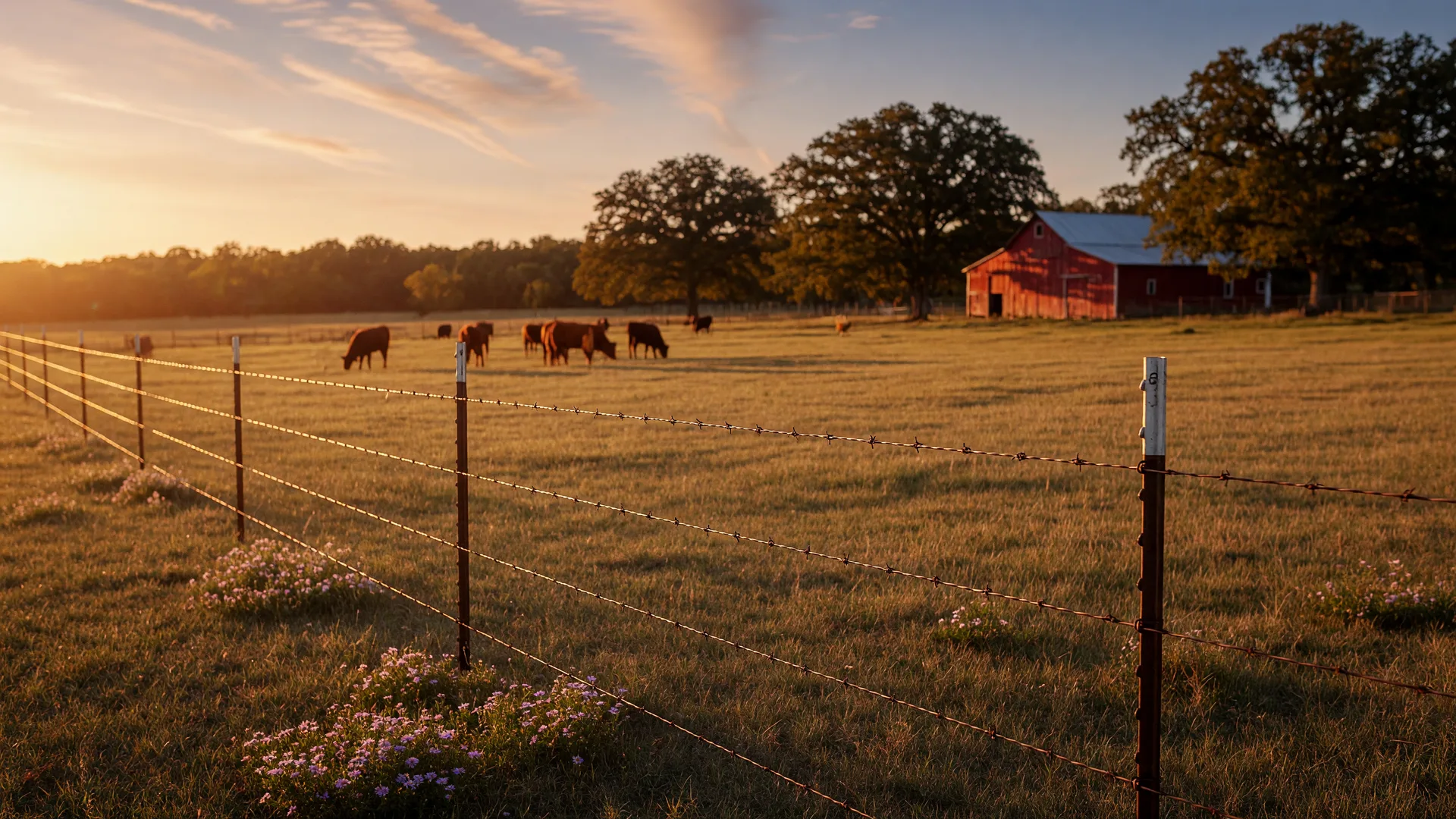
This guide answers a question we hear on almost every acreage tour: what fencing should be on the place, and what does it cost? On small county tracts like the one at 917 Goodwyn Rd, fences keep animals in, keep neighbors and traffic out, and quietly show how the land has been cared for. Here is how to plan and budget for them.
What are the main fence types for rural Texas acreage?
Texas A&M AgriLife Extension points to one rule that drives every choice: match the fence to the species, the purpose, and the budget. There is no single best fence, only the right fence for the job.
- Barbed wire (three to five strands) is the classic Texas boundary and cattle fence. Installed, local fence crews commonly quote roughly $3 to $6 per linear foot, about $20,000 per mile before gates and corners.
- Woven wire (field fence) uses tighter mesh and suits sheep, goats, dogs, and small operations, at roughly $1.50 to $6 per linear foot installed.
- High-tensile electric is the economical workhorse at $1 to $3 per linear foot, but needs a reliable charger, good grounding, and regular attention.
- Pipe and wood fencing belong near the homesite, driveway, and corrals rather than on a long boundary. They run $13 to $40 per linear foot and are worth it where appearance and strength matter.
AgriLife also notes that well-energized electric fence is economical for sheep, that goats need fencing sized to the animal, and that welded utility panels are the practical answer for feral hogs. Small poultry setups, like the one at 917 Goodwyn, typically pair a closer-mesh fence with overhead protection; this listing's barn and outbuilding layout was set up with that kind of use in mind.
Which fence fits the livestock you plan to keep?
Cattle do fine on four to five strands of barbed wire or high-tensile line. Horses deserve smoother, more visible fencing such as woven wire or high-tensile, with pipe or wood where they are fed and handled. Sheep and goats need smaller mesh or electric tape, and the Texas A&M Department of Animal Science warns that horned goats and welded hog panels are a poor combination. The animals decide the fence, not the other way around.
Do I need a permit to build a fence on Ellis County acreage?
For unincorporated rural land, Ellis County does not appear to regulate agricultural fence height or materials the way a city does. Height limits such as eight feet come from municipal ordinances, HOA covenants, and deed restrictions, and there is no statewide fence height law. Before you build, confirm whether your tract sits in a platted community with deed restrictions, and whether your precinct has adopted a stock law, which changes who keeps livestock in.
What does Texas fence law require for livestock?
Texas is an open-range state by default. Under the Texas Agriculture Code, the burden is on neighboring landowners to fence animals out rather than on owners to fence animals in. A county or precinct can change that with a stock law election, making the area closed range and requiring livestock to be fenced in. Public highways are treated as closed range everywhere. Because rules vary by precinct, ask the Ellis County Commissioners Court or county clerk whether your area is open or closed range before you count on a neighbor's fence.
How should buyers walk a fence line before closing?
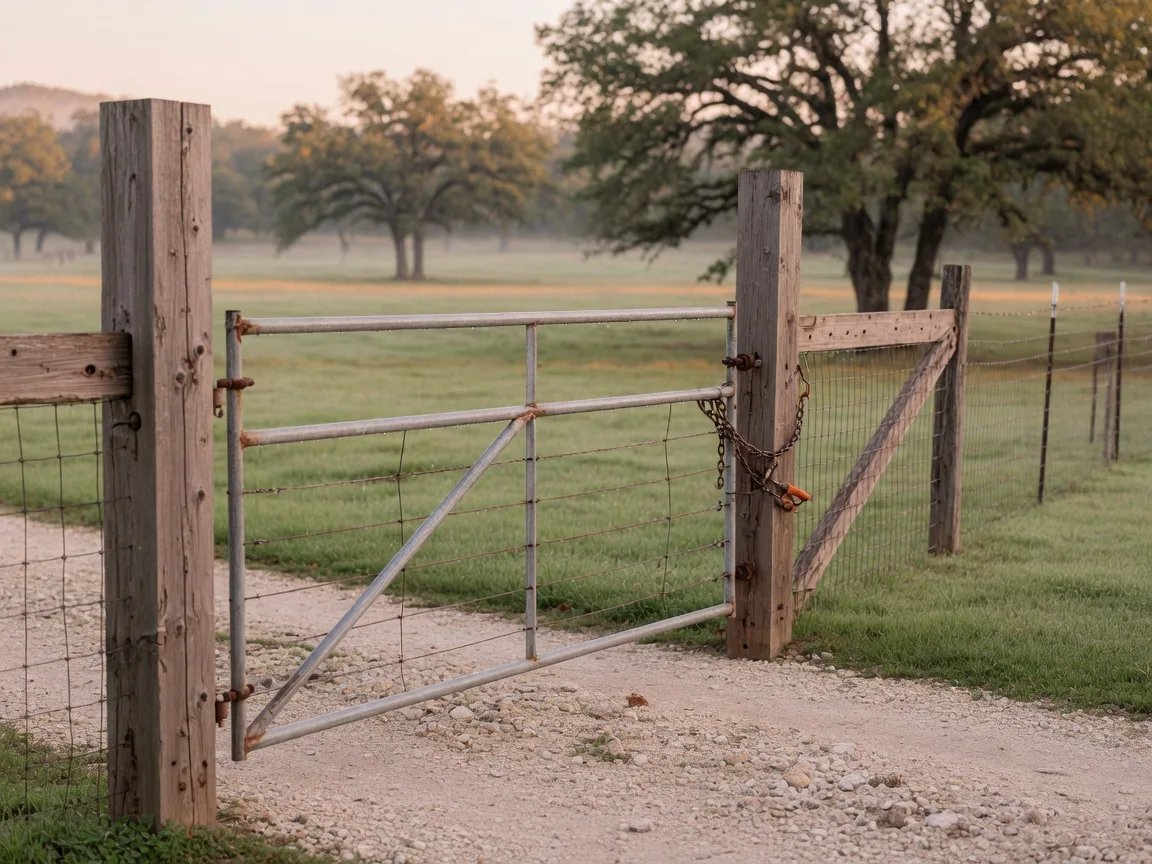
On a showing, we like to walk the lines and read the details: whether corner posts are braced and solid, whether gates swing and latch, where the fence crosses the creek, and whether wire is tight or sagging under mature trees. Fence condition is one of the most negotiable items on any acreage purchase, because it is visible, fixable, and easy to price.
Build a fence plan before you buy, not after
Fencing rarely makes or breaks a deal, but it shapes a first year on the land. Put fence type, condition, and cost on your shortlist beside the well, the septic, and the road. A few thousand dollars of fence work is easy to plan for; discovering it later is not.
Shannon and Scott Miles of the Shannon Miles Group are Land and Ranch Specialists and founding members of the eXp Land and Ranch division, based at 2322 Lamar Ave. in Paris, Texas. Both hold the Graduate, REALTOR Institute designation and are Certified Luxury Home Marketing Specialists. We walk every fence line twice, once for the listing and once for you.
Walk the lines at 917 Goodwyn Rd
Tour the renovated three-bedroom home, the barn, the creek, and all 18+ acres, and ask us anything about fencing, pasture, and livestock. Call the Shannon Miles Group at 903-785-2005.